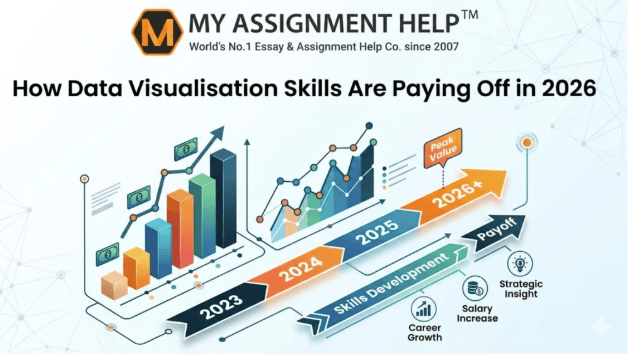
The Australian professional landscape has undergone a seismic shift. In 2026, the “lucky country” is no longer just reliant on resources and agriculture; we are a nation powered by bits, bytes, and—most importantly—how we see them. As the digital economy matures, the ability to transform a chaotic spreadsheet into a compelling visual narrative has evolved from a “nice-to-have” skill into a high-yield financial asset.
From the bustling tech hubs of Surry Hills to the corporate towers at Elizabeth Quay, data literacy is the new currency. Whether you are a student at the University of Melbourne or a mid-career professional in Brisbane, mastering tools like Tableau isn’t just about passing a unit—it’s about securing a competitive edge in a market that now demands real-time insights over static reports.
The Visualisation Revolution in the Australian Workforce
The demand for data-savvy professionals in Australia has seen a 35% year-on-year increase. In a world where data is generated at an exponential rate, the bottleneck is no longer data collection, but data interpretation. Employers in the ASX 200 are actively seeking graduates who can not only “crunch numbers” but also “tell the story.” This is where the learning curve hits a peak. For many students balancing the rigours of an Australian commerce or IT degree with part-time work, the technical complexity of sophisticated dashboards can be overwhelming. Consequently, many are turning to expert tableau assignment help to ensure their academic projects meet the high industry standards now expected by modern educators and recruiters
Why 2026 is the Year of the Visual Analyst
- The Rise of “Citizen Data Scientists”: You no longer need a PhD in Mathematics to influence business strategy. Generalist roles in marketing, HR, and hospitality management now require Tableau proficiency to track KPIs and consumer behaviour.
- Salary Premiums: According to 2026 Australian recruitment data, roles that list “Data Visualisation” as a core competency offer a 15-20% higher starting salary compared to traditional administrative or analytical roles.
- The Remote Work Boom: Data visualisation is the ultimate “remote-friendly” skill. Australian freelancers are now bidding on global projects from the comfort of the Gold Coast, providing high-end dashboarding services to international firms.

Bridging the Skill Gap: Academic Pressure vs. Professional Mastery
The Australian curriculum has pivoted hard toward “Work Integrated Learning” (WIL). This means assignments are no longer theoretical; they are based on real-world datasets from the Australian Bureau of Statistics (ABS) or local government portals. However, the pressure to perform across multiple subjects—from Macroeconomics to Java Programming—can leave students spread thin. When the deadline for a complex dashboard looms and you are still struggling with calculated fields or data blending, the stress can be immense. It is during these crunch periods that the phrase “do my homework for me“ becomes a common search query for those looking to maintain their mental health and academic standing without sacrificing quality.
Data-Driven Insights: The ROI of Data Skills
Source: Australian Department of Education and Digital Economy Report (2025-2026)
- Employment Rate: Graduates with Tableau and PowerBI certifications have a 92% employment rate within six months of graduation.
- Average Salary (AU): A Junior Data Analyst with visualisation skills now starts at approximately $88,000 AUD per annum in Sydney.
- Sector Demand: The highest demand comes from the Healthcare, Fintech, and Environmental sectors—all of which require visualising complex, multi-layered data points.
See also: How Ambient Computing Will Change Daily Life
Strategic Key Takeaways
- Visualisation is Universal: It is no longer restricted to IT; it is essential for Marketing, Finance, and Nursing.
- Tool Choice Matters: While Excel is foundational, Tableau is the industry standard for high-level interactive dashboards in Australia.
- Academic Support is Strategic: Utilising professional help is a common way for top-tier students to manage workload and learn best practices in data architecture.
- Context is King: Always use local Australian datasets to make your visualisations more relevant to the AU job market.
Frequently Asked Questions (FAQs)
Q1: Why is Tableau preferred over Excel for Australian assignments?
A: While Excel is great for basic charts, Tableau handles massive datasets (like ABS Census data) much more efficiently and allows for interactive “storytelling” that Australian universities now prioritise.
Q2: Are data visualisation skills relevant for non-tech degrees?
A: Absolutely. Nursing students use it for patient outcome tracking, and Law students use it to visualise crime statistics or litigation trends.
Q3: How do I find reliable help for my Tableau projects in Australia?
A: Look for services that understand the Australian grading system and provide plagiarism-free, data-driven solutions tailored to specific university requirements.
Q4: Is it expensive to learn these tools?
A: Many universities provide free licenses, but the “cost” is usually the time required to master the software.
Author Bio: Angelika
Senior Content Strategist & Academic Consultant Angelika is a seasoned educator and senior academic consultant at MyAssignmentHelp. With over a decade of experience in the Australian higher education sector, she specialises in bridging the gap between academic theory and professional practice. Her work focuses on empowering students through data literacy and strategic content planning, ensuring they are not just “exam-ready,” but “career-ready.”
References
- Australian Bureau of Statistics (2025). “Digital Literacy and the Labour Force.”
- Grattan Institute (2026). “The Evolution of Australian Graduate Skills.”
- Tech Council of Australia. “Annual Report on the Digital Economy 2026.
