If you’re wondering, do you get paid for donating your body to science, the answer is no.
Under both federal and state versions of the Uniform Anatomical Gift Act (UAGA), it is strictly illegal in every state for any organization, whether it’s a university medical school, a private for-profit body donation program, or a nonprofit body donation organization, to purchase human remains directly from a living person or their surviving estate.
Anyone promising to pay you for donating a body is breaking the law. Under the National Organ Transplant Act (NOTA), it is a federal crime to “transfer human organs or tissues for valuable consideration.” In many states, it is a felony ,and federal charges can be brought, especially if bodies were transported across state lines or if wire or mail fraud was part of the process.
Body donation programs may receive fees from educational or research facilities, but these can only cover reasonable costs for managing the donation process.
Although donors and families cannot legally receive payment, body donation programs can provide services that can help reduce end-of-life expenses. For example, when you donate a body to science, free cremation may be available.
If I Can’t Get Paid, What Do Families Receive?
Depending on the body donation program you choose, there are typically several benefits you get, including no-cost cremation, including:
- Financial relief: For example, nonprofit United Tissue Network covers 100% of the costs for coordinating the program, transporting the deceased, and cremation.
- Logistics: When a loved one passes away, the body donation program handles the arrangements, helping families deal with the burden of planning end-of-life arrangements.
- Legacy: Families typically find comfort and a sense of meaning knowing that the passing of a loved one is contributing to educating medical students, training surgeons, and helping researchers study diseases.
When you donate a body to science, free cremation is just one of the benefits. However, it can be a significant one. Traditional funerals and burial today cost about $10,000 when you factor in a viewing, memorial, embalming, caskets, staffing and facility rental, cemetery fees, and headstones. Even direct cremation, which only includes the most basic services required to conduct the cremation at a licensed facility, which averages about $2,000.
See also: How Ambient Computing Will Change Daily Life
How Donated Bodies Help Advance Medicine
Whole-body donations play a critical role in educating medical students, surgical training, device development, and scientific research.
Medical Education
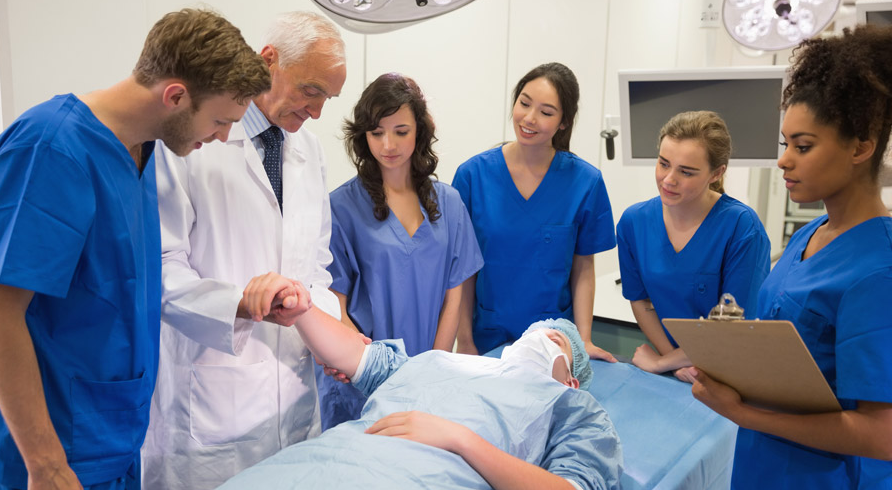
For generations, donated bodies have played a critical role in medical education. Medical students gain hands-on experience learning human anatomy in ways that textbooks, videos, and computer simulations cannot fully replicate.
This training helps future physicians develop a deeper understanding of the human body before they begin treating patients.
Surgical Training
Body donation support surgical training. Surgeons utilize anatomical donations to refine surgical techniques and learn new procedures.
Device Development
Medical device manufacturers may also work with donated bodies to evaluate and improve technologies before they are introduced into clinical settings.
Scientific Research
Researchers study diseases, investigate new treatment approaches, and explore ways to improve healthcare.
Making a Meaningful Contribution to Medical Science
Although donors will never meet the people who benefit from their selfless act, their contribution can help improve medical care for generations of patients to come. Many donors view this lasting impact as the most meaningful part of making the decision to become a body donor.
So, do you get paid for donating your body to science? No. Federal and state laws classify body donation as an anatomical gift rather than a commercial transaction, making payment illegal. However, many families find meaning when making this gift, while also eliminating cremation costs.
Since 2009, United Tissue Network has helped more than 20,000 families make this important contribution and provides free cremation for donors. A 501(c)(3) nonprofit organizing, UTN’s mission is simple:
“To empower people who want to make a difference through whole-body donation by uniting them with professionals dedicated to the advancement of medical technology, training and education.”
The benefits to society, however, are anything but simple. Past donations have led to significant breakthroughs in the treatment of many chronic diseases and helped train doctors and surgeons who will treat thousands of patients over their careers.
If you are considering whole-body donation, visit the United Tissue Network website to learn more or contact one of UTN’s Donor Coordinators, available 24/7 to answer your questions.
