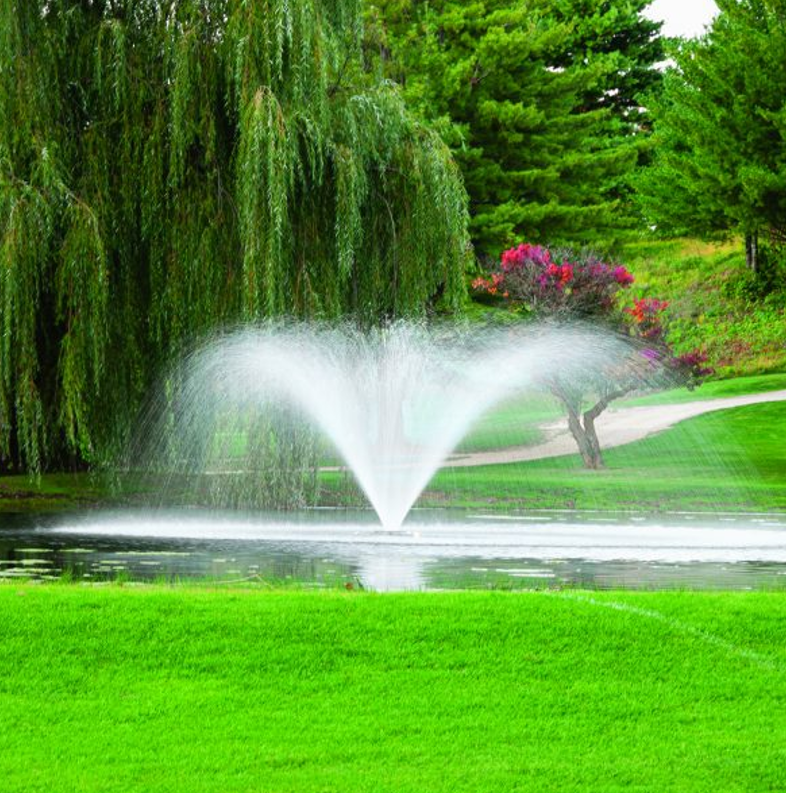
Most people glance at a fountain and see pure decoration. Pretty water, nothing more. That view misses what the equipment actually does beneath the surface. A good fountain shapes oxygen levels, moves stale water, and guards the whole pond against slow decline. Treating it as a mere ornament wastes its real power and leaves your water exposed.
Pond managers and landscapers learn fast that performance matters as much as looks. Large pond fountains keep sizable bodies of water circulating, oxygenated, and visibly clear long after the first wave of admiration fades. A strong unit does real labor every hour it runs. You gain a working system that happens to look stunning, not the other way around.
Pretty Surface, Serious Job Underneath
Decoration Is Only Half The Story: A fountain certainly draws the eye, yet that is the smallest part of its value. Beneath the spray, it pushes water, lifts oxygen, and keeps the pond from going stale. Owners who buy purely for looks often miss this. The machine earns its keep through work, not just sparkle on a sunny afternoon.
Function Hides In Plain Sight: Still water invites trouble that a fountain quietly prevents. Without movement, ponds slide toward murk, odor, and runaway algae growth that turns clear water into a green mess. A running fountain disrupts that cycle constantly. You see a lovely display, but the real story is the steady labor happening every minute below the surface.
Design Without Movement Falls Short: A pond planned for beauty alone rarely stays beautiful for long. Flat water clouds, smells, and disappoints within a single warm season. Movement is what holds the look together over time. Skip the working fountain and you are left maintaining a problem rather than enjoying a feature that mostly takes care of itself.
Oxygen, Flow, And The Hidden Mechanics
Oxygen Keeps Water Alive: Fish, beneficial bacteria, and plants all depend on oxygen dissolved in the water. A fountain pulls water upward and breaks the surface, pulling fresh air down with every cycle. Deeper ponds suffer most without this. Lose that exchange and the lower layers turn lifeless, dragging the entire pond toward decline you can actually smell.
Circulation Stops The Slow Rot: Standing water separates into layers, with the bottom going stagnant and sour. A fountain keeps everything mixing, so no single zone sits untouched for weeks. This constant turnover matters more than most owners realize. It prevents the buildup of sludge and gas that eventually ruins both water quality and the health of anything living in it.
Surface Control Blocks Trouble: The top of a pond is where many problems begin. Debris, film, and floating organic matter collect on still surfaces and feed bigger issues downstream. A fountain breaks that film apart all day long. Cleaner surface, healthier depths, and far fewer headaches for whoever happens to manage the pond through a long, hot summer.
Why Professionals Plan Around Fountains
Designers Build It In Early: Experienced installers rarely treat a fountain as a final touch. They factor it into the landscape design from the first sketch, sizing the pond and the pump together as one system. This planning prevents weak circulation later. A fountain added as an afterthought often underperforms, while one designed in from the start carries the whole pond.
Sizing Decides Everything: Match the unit to the water it serves or risk wasting money on both ends. An undersized pump leaves dead zones, while an oversized one drains power for no extra benefit. Professionals calculate volume, depth, and spread before choosing. That careful sizing is the difference between a fountain that merely runs and one that genuinely manages the water.
Placement Shapes Results: Where the fountain sits matters as much as its strength. Centered units spread movement evenly, while edge placement can leave far corners untouched and prone to trouble. Smart positioning covers the whole basin. Get this wrong and parts of your pond stay stagnant no matter how powerful the equipment you installed actually is.
What A Working Fountain Actually Delivers
A fountain chosen as a tool, not a trinket, returns value you can measure across the season. The benefits go well past appearance and into the daily health of the water. Here is what a properly matched large fountain brings to a sizable pond or lake:
- Steady oxygen exchange that keeps fish active and bacteria working through summer heat.
- Constant circulation that breaks up stagnant layers before they sour the water.
- Surface agitation that scatters debris and slows the spread of unwanted buildup.
- Visible clarity that holds for months rather than fading within a few warm weeks.
One Purchase, Many Jobs: The smart part is how much a single unit handles at once. You are not buying decoration and then paying separately for aeration and circulation. A well-sized fountain folds all three tasks into one machine. Skipping it usually means stacking up problems you will spend the season chasing instead of enjoying your water.
See also: What Do Digital Marketing Agency Services Include and How Do They Drive Business Growth?
Put Your Fountain To Work
Stop thinking of a large fountain as something that only looks nice in photos. It is a water management tool first, and a beautiful one second. The right unit protects your pond, lifts its health, and saves you from the slow grind of fixing avoidable problems. Picture clear, moving water that holds its quality all season. Choose a fountain that works as hard as it looks today.
