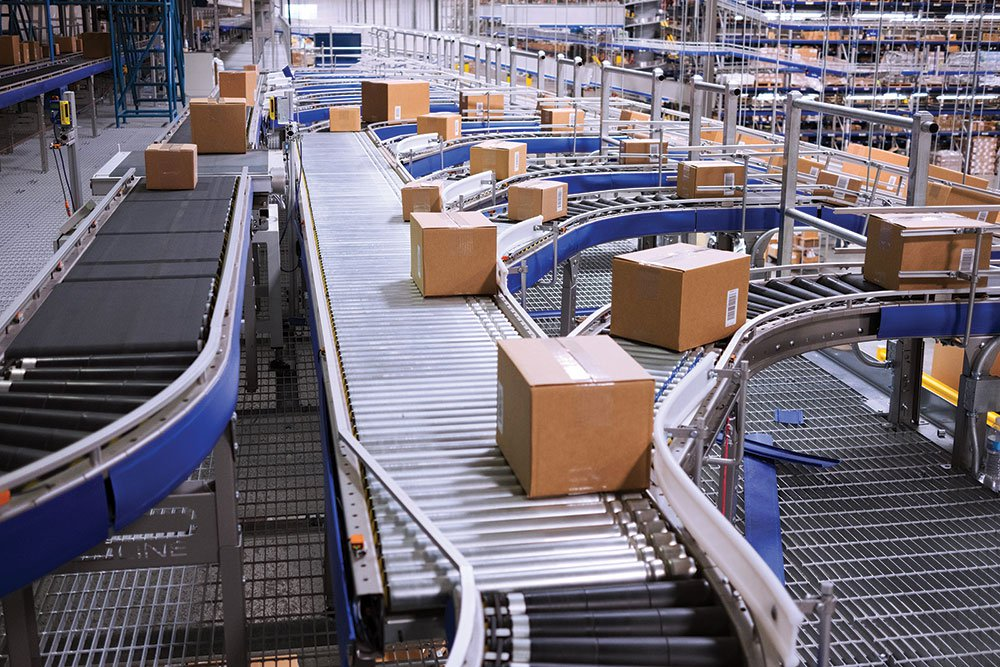
A conveyor sorter going down for even twenty minutes can back up an entire shift. Orders stop moving, staff stand around waiting, and by the time the line is running again, the whole day’s schedule is off. Most facility managers know this, yet sorter maintenance still tends to get pushed down the priority list until something actually breaks. If you’ve ever worked with a conveyor installation company, you’ve probably heard the same warning more than once: small issues left unchecked almost always turn into full stoppages.
The frustrating part is that most sorter failures don’t come out of nowhere. There are usually signs weeks, sometimes months, before the actual breakdown. The problem is that those signs are easy to miss if nobody is specifically looking for them.
Why Sorters Fail More Often Than People Expect
A conveyor sorter has a lot of moving parts working together at speed, and that’s exactly why it’s more failure-prone than a simple belt line. Diverters, sensors, motors, pushers, and control systems all have to stay in sync. When one part drifts even slightly out of calibration, the rest of the system has to compensate, and that extra strain shortens the life of everything around it.
Dust and debris are a bigger factor than most people assume. In a high-throughput facility, particulate buildup on sensors and photo-eyes can cause misreads that look like a software glitch but are really just a dirty lens. Vibration is another quiet culprit. Bolts loosen, alignment shifts, and belts start tracking slightly off center, none of which is dramatic on its own, but all of it adds up.
Age plays a role too, though not in the way people expect. A ten-year-old sorter that’s been properly maintained can outperform a three-year-old one that’s been neglected. Maintenance history matters more than the manufacture date on the nameplate.
The Warning Signs Most Teams Ignore
Unusual noise is the most obvious sign, and also the most commonly dismissed. A grinding sound, a rhythmic clicking, or a motor that seems to be working harder than usual is rarely nothing. It’s tempting to keep running the line until the noise gets “bad enough” to justify stopping, but that approach usually costs more in the long run than a short scheduled shutdown would have.
Sorting accuracy is another indicator that gets overlooked. If packages are landing in the wrong lane more often than they used to, that’s not always an operator or software issue. Sometimes it’s a diverter that’s lost its timing, or a sensor that’s been knocked slightly out of position during a busy shift.
Heat is worth paying attention to as well. Motors and gearboxes running noticeably warmer than normal are usually a sign of friction somewhere in the system that shouldn’t be there. None of these signs demand an emergency call on their own, but together they paint a pretty clear picture of a system heading toward a bigger problem.
What Preventative Maintenance Actually Prevents
People sometimes think of preventative maintenance as a nice-to-have, something you do if there’s budget left over. In practice, it’s closer to insurance. A facility that skips it isn’t avoiding cost, it’s just deferring a much bigger cost to a less predictable time, usually during peak season when the line can least afford to stop.
Regular inspections catch the small stuff before it becomes the expensive stuff. Belt tension checks, sensor cleaning, lubrication schedules, and alignment reviews all sound routine, but they’re the reason a sorter runs for years without a major failure instead of months. This is also where working with an experienced warehouse automation company makes a real difference, because the people doing the maintenance actually understand how the system was designed to behave, not just how to react when it stops behaving that way.
There’s also a planning benefit that’s easy to underestimate. Scheduled maintenance happens on your terms, during a slow period or an off-shift window. Unplanned downtime happens whenever the system decides to fail, which is almost never convenient.
Common Mechanical and Electrical Issues
Belt misalignment is probably the most frequent mechanical complaint, and it’s usually caused by uneven loading, worn rollers, or tracking guides that have shifted over time. Left alone, it wears down the belt edge and eventually causes tearing.
Motor and gearbox wear shows up as inconsistent speed or intermittent stalling. Sometimes it’s as simple as a lubrication issue, other times a bearing has started to fail and needs replacing before it seizes completely.
On the electrical side, sensor faults are extremely common, especially in facilities with a lot of dust, moisture, or temperature swings. A photo-eye that’s slightly out of alignment can cause a diverter to fire late or not at all, which looks like a sorting error but is really a detection problem.
Wiring and control panel issues tend to be less frequent but more disruptive when they happen. Loose connections, worn cabling, or outdated control logic can bring an entire sortation zone to a stop rather than just one section. These are usually the failures that require a specialist rather than an in-house maintenance tech, simply because diagnosing them properly takes equipment-specific knowledge.
Why Working With the Right Conveyor Company Matters
Not every conveyor company handles sortation systems the same way, and the difference shows up most when something actually goes wrong. A team that only knows how to install equipment isn’t necessarily equipped to troubleshoot it years later. Sortation systems are complex enough that ongoing familiarity with your specific setup matters more than general conveyor experience.
This is where a lot of facilities get caught out. They bring in one company for installation and a completely different one for repairs, and neither has full context on how the system was originally configured. That gap in knowledge slows down every future service call, because the new team has to relearn the system from scratch before they can even start diagnosing the problem.
Working with a partner who handles installation, maintenance, and repairs under one roof avoids that disconnect entirely. If your current setup feels like it’s being patched together by whoever’s available rather than managed properly, it might be worth having an actual conversation about what a better maintenance plan would look like. You can contact us directly to talk through what’s going on with your system.
Building a Maintenance Routine That Actually Works
A maintenance routine only works if it’s specific to the equipment running it, not a generic checklist pulled from a manual. Inspection frequency should match how hard the sorter actually runs, not an arbitrary calendar date. A system running three shifts a day needs far more frequent attention than one running a single shift.
Documentation matters more than most facilities give it credit for. Keeping a real record of every repair, part replacement, and inspection result makes it much easier to spot patterns, like a particular motor failing every eighteen months or a sensor that keeps drifting out of calibration in the same spot. Without that history, every issue gets treated as a one-off instead of part of a bigger pattern worth fixing at the source.
Good preventative maintenance services aren’t about eliminating downtime completely, since some of it is unavoidable. They’re about making sure the downtime you do have is short, scheduled, and predictable instead of sudden and expensive.
